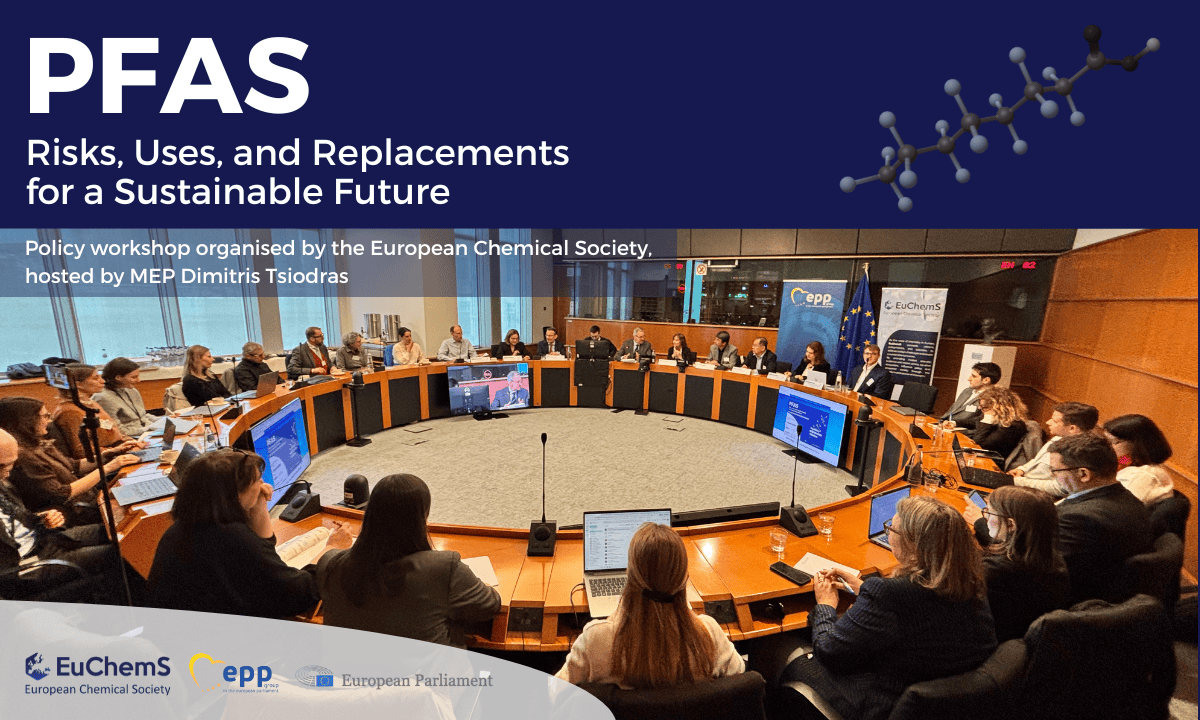
The European Chemical Society (EuChemS) organised a workshop about PFAS on March 5, 2026 at the European Parliament to provide a science-based, balanced perspective on one of the most complex regulatory challenges that the EU is currently facing. By bringing together scientists, policymakers, industry representatives and civil society, the aim was to clarify the state of knowledge on PFAS risks, uses and alternatives, and to support informed decision-making at a critical stage in the EU restriction process.
The workshop confirmed a strong consensus that decisive EU-wide action on PFAS is both urgent and unavoidable. Participants emphasised the extreme persistence, mobility and accumulation of PFAS, leading to long-term risks for human health and the environment. At the same time, it was recognised that PFAS remain essential in many applications. While alternatives already exist in some cases, broader substitution will require sustained research, innovation and time.
This position is reflected in the preliminary conclusions of the ECHA committees. The Risk Assessment Committee (RAC) concludes that PFAS risks justify a broad restriction across the entire group. In contrast, the Socio‑Economic Analysis Committee (SEAC) considers such a restriction appropriate only if combined with targeted, time‑limited derogations to ensure proportionality and to manage socio‑economic impacts. As a result of these assessments, together with extensive stakeholder input, the policy approach has evolved away from a simple full ban towards a more differentiated, hybrid model. This model combines overarching restrictions with derogations and risk‑control measures, embedded within a comprehensive lifecycle approach that covers production, use, and end‑of‑life phases. Final scientific opinions are expected by the end of 2026, after which the European Commission will prepare a legislative proposal for Member State voting.
In the coming months, several developments can be expected. The finalisation of RAC and SEAC opinions will further clarify the scope of restrictions and the justification for exemptions. Debate will increasingly focus on the availability of alternatives, the duration of transition periods, and the balance between environmental protection and industrial competitiveness. At the same time, attention will shift toward practical implementation, including supply‑chain communication, monitoring obligations, and support for innovation.
Overall, the direction of travel is clear: a broad PFAS restriction is highly likely, but implemented through a phased and differentiated approach. The next phase will be decisive in shaping how Europe moves towards reducing PFAS risks, with entry into force expected between 2027 and 2029.