
“Science should advise policy. Policy should listen to science.”
These two statements have echoed through centuries, across disciplines and political systems, resurfacing whenever society faces challenges that demand evidence-based solutions.
In 2023, I was invited to the 16th Young Faculty Meeting of the Swiss Academy of Sciences (SCNAT) in Griesalp, Switzerland, to speak about science–policy interactions and the role of research beyond the borders of academia. My talk, “Does science contribute to policy making?”, explored the fundamentals of the European policy landscape and highlighted the knowledge and skills scientists need when engaging with policymaking.
After presenting practical examples, I opened the floor for discussion. The audience – young Swiss chemists – did not hesitate to engage. Very early on, one comment captured the mood in the room:
“The probability that policymakers actually include scientific advice in the legislation is close to zero.”
The comment was blunt. And, to a large extent, accurate.
This naturally leads to the next question: should scientists spend their precious time engaging with policy at all?
The answer is unequivocally yes.
Can we imagine today’s legislation on food safety, environmental protection, public health, or chemicals without scientific input? Of course not. Science may not be the only voice at the table, but it remains an indispensable one. Policymaking is a process in which multiple stakeholders – industry, consumers, NGOs, and others – compete and negotiate. Policymakers are tasked with finding compromises that are politically acceptable, economically feasible, and socially defensible. Scientific evidence is one part of this equation, but rarely the only deciding factor.
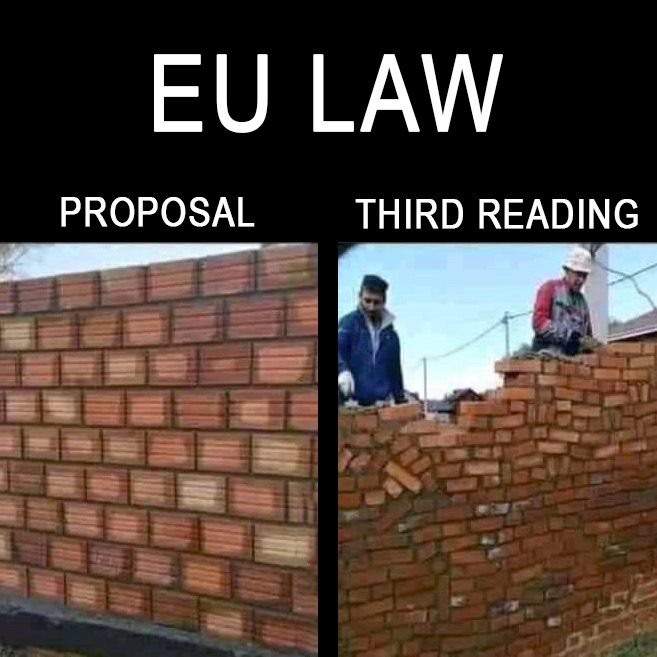
The result is often a piece of legislation that feels diluted: something lost during drafting, more lost in translation into national languages, and yet more during implementation. This can be frustrating for scientists who recognise where evidence has been softened or sidelined. But this is not a modern failure – history tells us that policymaking has always been imperfect.
What can be done is to ensure that science is present, persistent, and well-articulated throughout the process.
For scientists, this means investing in skills beyond the laboratory: understanding how policy works, learning how to communicate evidence clearly, and recognising the limits – and responsibilities – of scientific advice. Courses, training, and engagement with science–policy platforms are not distractions from research; they are ways to increase its impact.
At the same time, caution is needed. Public trust in science is fragile, and the perceived proximity between science and politics can sometimes undermine it. Maintaining transparency, integrity, and independence is therefore essential.
Science will not always win political battles. But without scientific engagement, those battles would be fought blindly. And that, ultimately, is not an option.